From Gombe to Glasgow: reflections from my NSHBT-HaemSTAR Clinical Observership
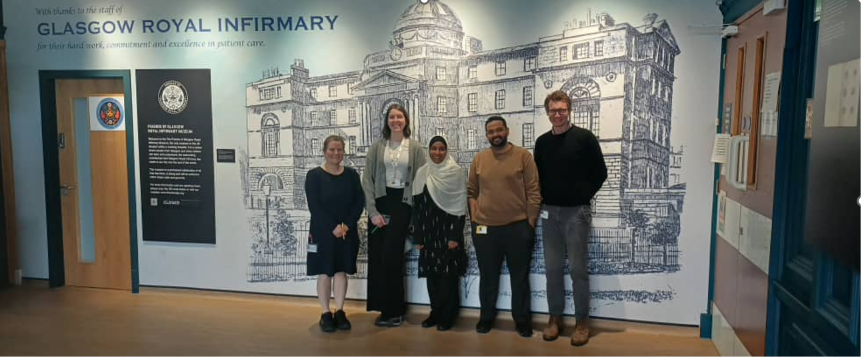
I write this blog to share experience of my clinical observership across three hospitals: Glasgow Royal Infirmary, Queen Elizabeth University Hospital and New Victoria Hospital.
My expectation for the HaemSTAR Clinical Observership in Glasgow was to gain knowledge and exposure to advanced thrombosis and haemostasis services. However, my experiences went far beyond that. The observership was a journey of professional growth, self-reflection, and personal transformation that will significantly influence how I view healthcare, leadership, and my role as a haematologist practising in low resource settings.
Coming from North-East Nigeria, where healthcare professionals often work within significant resource constraints, I initially anticipated that the greatest differences I would encounter would be related to technology and access to specialized treatments. While these differences were certainly evident, I also realized that the most remarkable aspect of the NHS system was not the technology itself, but the culture that surrounded patient care.
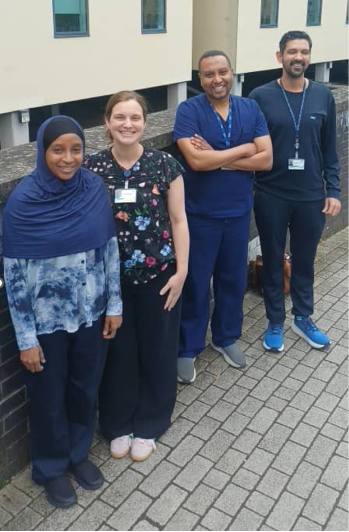
Throughout my placements at the Queen Elizabeth University Hospital, Glasgow Royal Infirmary, and New Victoria Hospital, I observed an environment where every member of the healthcare team had a clearly defined role and collaboration embedded into daily practice. I understood that patient outcomes were not solely dependent on modern equipment or expensive therapies but are equally dependent on strong systems, effective communication, mutual respect, and a shared commitment to patient-centred care.
One of the most impactful experiences for me was attending multidisciplinary team meetings, complex cases being discussed and contributions from other professions were amazing and showed the importance of collective decision-making. It prompted me to reflect on my own practice and consider how stronger multidisciplinary engagement could further improve patient outcomes within my institution.
The observership also gave me an opportunity to appreciate how patient involvement in healthcare determines clinical outcome. I was impressed by the emphasis on shared decision-making and patient education. Patients were consistently treated as active participants in their care, and this has made me reflect on my own communication style and highlighted opportunities to further empower patients through education and communication in their clinical decision-making.
The observership was an eye-opening and insightful experience. Living and working even briefly within a different healthcare system, I learnt to adapt to various practices, engage with colleagues from diverse backgrounds, and appreciate alternative approaches to healthcare services. These experiences have broadened my perspective and strengthened my confidence. Perhaps the most significant impact of this observership has been the way it has reshaped my aspirations for the future. Rather than focusing solely on individual patient encounters, I now find myself thinking more about systems, quality improvement, service development, and sustainable change.
The experience has inspired me to become more actively involved in developing structured approaches to thrombosis and haemostasis care, promoting evidence-based practices, strengthening multidisciplinary collaboration, and supporting research initiatives that address the unique challenges faced by patients in Nigeria.
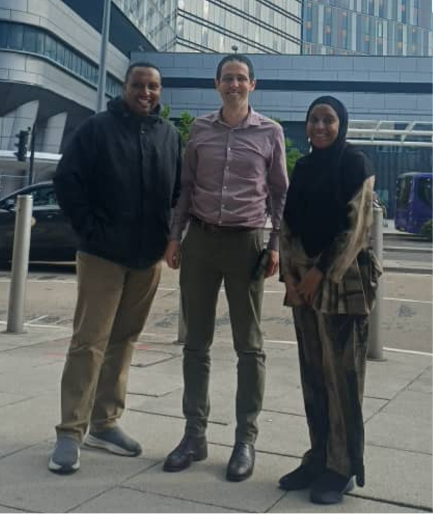
As I reflect on my time in Glasgow, I recognize that the true value of this observership lies not only in the knowledge I gained but in the perspective I acquired. It reinforced my belief that meaningful improvements in healthcare can be achieved regardless of resource limitations when there is strong leadership, effective teamwork, a culture of continuous learning, and an unwavering commitment to patient-centred care.
I return home with renewed motivation, greater confidence, and a clearer vision of the kind of clinician, educator, researcher, and leader I aspire to become. The lessons I learned during this observership will continue to influence my practice and professional development for many years to come.
I am deeply grateful to the NSHBT-HaemSTAR Collaborative Research Fellowship, my supervisors, mentors, and all the teams across NHS Greater Glasgow and Clyde who welcomed me so warmly and generously shared their expertise. Their supports made this experience truly memorable and transformative, and I look forward to applying these lessons to improve patient care, education, and haematology services within my own setting.